COG vs weight placement

cosmo9370

Hammering Axles
Jan 5, 2023
9
4
3
55
NJ
So I think I may have a problem with my son’s car and want to know if I need to redo the body before moving on to polishing the wheels and axles.

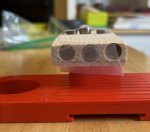
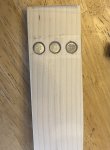
It is a 3 wheel rail-rider. Right now I have a COG of 1/2 in front of rear axle with 1.5 oz tungsten behind the rear axle and 2.0 ounces in front of rear axle. Will probably need to adjust weights slightly after painting, graphite, CA glue by axle holes, etc. and figure that will need to come from back due to the 1/2 COG. Didn’t measure weight distribution on wheels yet.

We don’t have a test track (I do have a 8 foot piece of plywood to set the steering. My 2 main concerns are :

1 - am I losing to much potential energy with 1.5 oz behind and 2.0 oz in front of axles?

2 - will the car be too wobbly and unstable with such a tight COG and the weight distribution behind/in front of axles? I think the extra weight in front actually helps here, right?

I obviously need to drill another row of holes in front of axles and my thought was to put more weight in the front 3 to shift the COG.

I know it is a less than ideal design but I am limited on tools and time since I will be out of town and the car has to be finished tomorrow. And we already bought cylinder weights before finding this site and learning about the cubes and ladder design. I do have tungsten putty and more of the smaller cylinders.

Sorry so many questions this week but first time building a thinner car and trying to account for all these new tips I am learning about!
 

Attachments

  • 273E8F19-27E3-4999-9398-7E256DFD1FB0.jpeg
    273E8F19-27E3-4999-9398-7E256DFD1FB0.jpeg
    1.6 MB · Views: 180
  • 72B7729F-65E9-4A1E-B6A3-F961D282968A.jpeg
    72B7729F-65E9-4A1E-B6A3-F961D282968A.jpeg
    2 MB · Views: 182
  • 152EE0C6-3420-4A22-8C5C-54ABAE29718D.jpeg
    152EE0C6-3420-4A22-8C5C-54ABAE29718D.jpeg
    971.7 KB · Views: 170
  • AA593806-1419-4894-BB0F-7AAD0DAD399B.jpeg
    AA593806-1419-4894-BB0F-7AAD0DAD399B.jpeg
    1.4 MB · Views: 177
Last edited:
You do have a lot of weight in front of the rear axle and very little behind it, but that’s not because of a mistake you made, it’s simply the design of the car. I’d suggest making a ladder body. It doesn’t take more than an hour or two to drill, cut out, and sand.
 
  • Like
Reactions: cosmo9370
So I think I may have a problem with my son’s car and want to know if I need to redo the body before moving on to polishing the wheels and axles.

It is a 3 wheel rail-rider. Right now I have a COG of 1/2 in front of rear axle with 1.5 oz tungsten behind the rear axle and 2.0 ounces in front of rear axle. Will probably need to adjust weights slightly after painting, graphite, CA glue by axle holes, etc. and figure that will need to come from back due to the 1/2 COG. Didn’t measure weight distribution on wheels yet.

We don’t have a test track (I do have a 8 foot piece of plywood to set the steering. My 2 main concerns are :

1 - am I losing to much potential energy with 1.5 oz behind and 2.0 oz in front of axles?

2 - will the car be too wobbly and unstable with such a tight COG and the weight distribution behind/in front of axles? I think the extra weight in front actually helps here, right?

I obviously need to drill another row of holes in front of axles and my thought was to put more weight in the front 3 to shift the COG.

I know it is a less than ideal design but I am limited on tools and time since I will be out of town and the car has to be finished tomorrow. And we already bought cylinder weights before finding this site and learning about the cubes and ladder design. I do have tungsten putty and more of the smaller cylinders.

Sorry so many questions this week but first time building a thinner car and trying to account for all these new tips I am learning about!
Check PM
 
You have to measure the COG with the wheels installed. That might move it up some. 1/2" is pretty aggressive. The information I have gotten and put into practice is that a better way of measuring weight distribution is to get three small digital scales and measure how much weight is on the DFW. 10-15 grams seems to be the range for a scout car, with less for better tracks and more for bumpy tracks.
 
  • Like
Reactions: cosmo9370
So I think I may have a problem with my son’s car and want to know if I need to redo the body before moving on to polishing the wheels and axles.

It is a 3 wheel rail-rider. Right now I have a COG of 1/2 in front of rear axle with 1.5 oz tungsten behind the rear axle and 2.0 ounces in front of rear axle. Will probably need to adjust weights slightly after painting, graphite, CA glue by axle holes, etc. and figure that will need to come from back due to the 1/2 COG. Didn’t measure weight distribution on wheels yet.

We don’t have a test track (I do have a 8 foot piece of plywood to set the steering. My 2 main concerns are :

1 - am I losing to much potential energy with 1.5 oz behind and 2.0 oz in front of axles?

2 - will the car be too wobbly and unstable with such a tight COG and the weight distribution behind/in front of axles? I think the extra weight in front actually helps here, right?

I obviously need to drill another row of holes in front of axles and my thought was to put more weight in the front 3 to shift the COG.

I know it is a less than ideal design but I am limited on tools and time since I will be out of town and the car has to be finished tomorrow. And we already bought cylinder weights before finding this site and learning about the cubes and ladder design. I do have tungsten putty and more of the smaller cylinders.

Sorry so many questions this week but first time building a thinner car and trying to account for all these new tips I am learning about!
I think most racers have a different slant on weight distribution. My grandsons car looks almost identical to yours. THE DFW weighs in at 17.8 g, the DRW weighs in at 52.1 g and the other rear wheel weighs in at 71.0 g. Some racers will tell you the weight difference at the rear wheels is excessive. But left side vs. right side is balanced. The COG is only 1/2". Thought that was going to be a problem but on race day it was smooth and stable and smoked the rest of the pack. Would like to reduce the weight on the DFW but can't figure out how. Have carved out as much wood in the front as much as I dare and reversed front to back. This allowed me to push weight far behind the rear axel but also pulled the COG back as well. Suggestions??
 
I think most racers have a different slant on weight distribution. My grandsons car looks almost identical to yours. THE DFW weighs in at 17.8 g, the DRW weighs in at 52.1 g and the other rear wheel weighs in at 71.0 g. Some racers will tell you the weight difference at the rear wheels is excessive. But left side vs. right side is balanced. The COG is only 1/2". Thought that was going to be a problem but on race day it was smooth and stable and smoked the rest of the pack. Would like to reduce the weight on the DFW but can't figure out how. Have carved out as much wood in the front as much as I dare and reversed front to back. This allowed me to push weight far behind the rear axel but also pulled the COG back as well. Suggestions??
I am responding to your 2026 question....not the2023 post. The only way I know to reduce DFW weight is to shift more weight behind the rear axle. As a league racer, I focus on the DFW weight and never even look at the COG. The current BASX national champion focuses on getting the balance equal left to right, but would most likely want to see a DFW weight closer to 13 gr. If that were my grandson's car...since it is pretty well balanced left to right, I would focus more on rear wheel alignment and wheel prep to see the most speed increases. DM me if you would like to discuss the details.